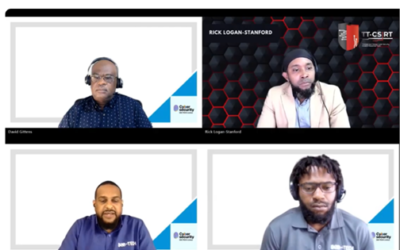
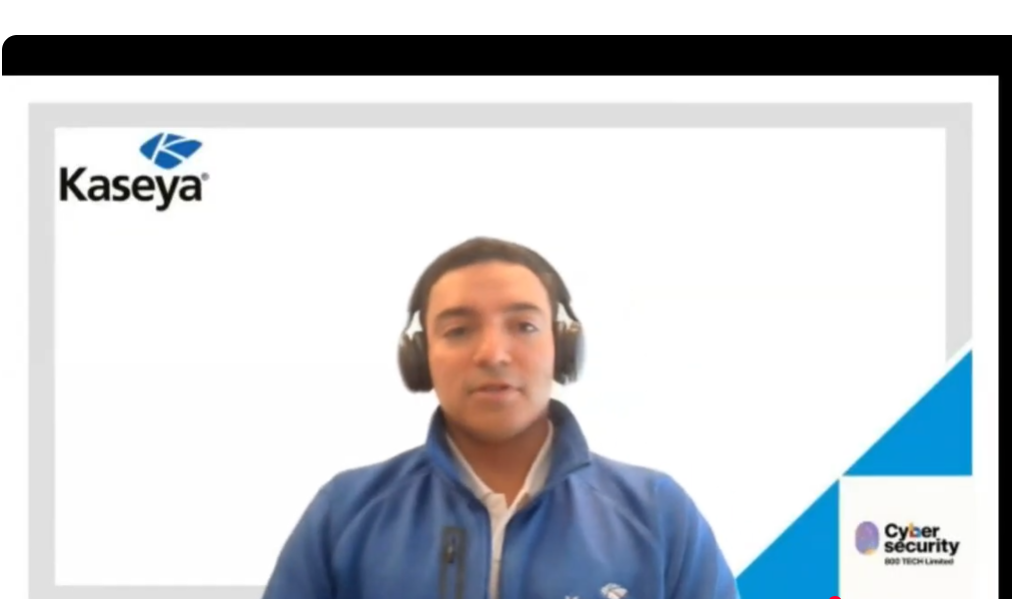
An excerpt from 800 TECH’s 3rd Annual Cybersecurity Webinar (2025), From Awareness to Action: AI Risk Readiness for Business Leaders; the conversation took a deep dive into one of today’s most pressing digital realities the Dark web and its link to AI-driven cyber threats. As businesses across the Caribbean accelerate their digital transformation, the dark web has evolved into a silent marketplace for stolen credentials, company data, and personal identities. To shed light on this hidden danger, Mr. Jorge Gomez, Senior Strategy Solution Specialist at Kaseya, joined the Regional panel, Junior Gilpin, Director of Education, ISC2 Caribbean Chapter, Rick Stanford-Logan, TTCSIRT and David Gittens, moderated by Jason Abraham, panel to discuss how Dark Web ID, a Kaseya solution and strategic partner of 800 TECH, is helping organizations detect and respond to hidden breaches before they escalate.
Meet the Expert: Jorge Gomez, Kaseya
With nearly a decade of experience in backup and cybersecurity, Jorge Gomez is a KASEYA-certified administrator in backup, dark web, email, and cloud security. He supports managed service providers and IT professionals globally in strengthening their defences against evolving cyber threats.
His presentation, titled “Dark Web ID: Safeguarding Your Digital Footprint”, offered a rare glimpse into how cybercriminals operate, what the dark web looks like, and how AI is being weaponized to amplify the risks.
AI and the Dark Web: A Dangerous Intersection
Gomez began by explaining how artificial intelligence has accelerated the exploitation of stolen credentials. He emphasized that most of today’s breaches begin with compromised passwords and phishing schemes, which AI tools are now making more convincing and difficult to detect.
“AI has accelerated how fast attackers can exploit vulnerabilities,” Gomez explained. “We’re seeing compromised credentials lead to breaches faster than ever before.”
From credential theft and phishing to vulnerability exploits and botnets, Gomez identified the four most common methods of network compromise and urged businesses to see beyond their office walls. Employees often reuse company emails and passwords across third-party websites; an open door for hackers when those external sites are breached.
The Hidden Dangers of Exposed Credentials on the Dark web
Through real-world examples, Gomez demonstrated how leaked credentials can put entire organizations at risk. In one case, a small business owner discovered via a Dark Web ID scan that her active banking password was exposed on the dark web, potentially giving hackers access to millions in credit lines.
“Dark Web ID acts like a digital smoke detector for your business,” he said. “It detects the scent of a breach before it becomes a full-blown fire.”
This proactive visibility allows companies to fortify their HR, compliance, and IT strategies, closing critical security gaps that often go unnoticed until it’s too late.
Inside the Dark Web: What It Really Looks Like
In one of the most striking moments of the session, Gomez shared screenshots from actual dark web marketplaces revealing a thriving underground economy where:
- Employee credentials and personal data are traded like commodities.
- Criminal networks operate with customer service, user ratings, and even holiday promotions.
- Stolen passports, IDs, and banking details are sold globally, including in regions like the Caribbean.
This unsettling transparency underscores why businesses must adopt a zero-trust mindset assuming credentials are already compromised and focusing on monitoring, detection, and rapid response.
AI-Powered Phishing: The New Face of Deception
The presentation also highlighted how AI-generated phishing emails are becoming nearly indistinguishable from legitimate messages. Cybercriminals now use generative AI to craft convincing fake emails, SMS messages, and websites that imitate trusted brands like Microsoft or HSBC.
“The AI-driven phishing attacks we see today are smarter, faster, and far more targeted,” said Gomez.
To combat this, he urged organizations to adopt multi-factor authentication (MFA), train employees to recognize phishing cues, and partner with cybersecurity experts like 800 TECH to automate compliance and ongoing monitoring.
Proactive Steps for Business Leaders
Gomez closed his session with actionable recommendations:
Think before you click — treat every unexpected link or attachment with caution.
Adopt a zero-trust approach — assume every user or system could be compromised.
Automate compliance and risk monitoring with partners like 800 TECH.
Implement multi-factor authentication (MFA) for all critical accounts.
Stay informed — continuous education and dark web monitoring are your best defences.
“Cybersecurity isn’t about fear — it’s about awareness, visibility, and control,” Gomez concluded.
Building a Safer Digital Future
As this year’s 800 TECH Cybersecurity Webinar emphasized, AI risk readiness goes beyond technology it’s about culture, strategy, and collaboration. The partnership between Kaseya and 800 TECH represents a proactive step in bridging the gap between awareness and action, empowering Caribbean businesses to thrive securely in the AI era.
Watch the full webinar discussion