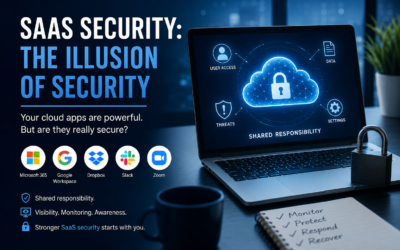

Many businesses invest heavily in cybersecurity. However, one of the biggest threats often remains hidden in plain sight. Forgotten software subscriptions, abandoned user accounts, unused integrations, and overlooked cloud applications can quietly expose organisations to significant Software as a Service (SaaS) security risk.
As businesses continue to adopt more cloud-based tools, maintaining visibility and control over the entire software ecosystem becomes increasingly important. Without proper oversight, companies may face unnecessary costs, data exposure, compliance concerns, and reputational damage.
Why SaaS Security Risks Are Growing
SaaS applications have transformed the way businesses operate. Instead of installing software on local machines, organisations now subscribe to cloud-based platforms that can be accessed from anywhere. While this model improves flexibility and productivity, it also creates new challenges. Employees regularly sign up for tools, test applications, connect integrations, and grant permissions. Yet many of these applications remain connected long after they stop being used. As a result, SaaS security risks continue to grow because businesses often lack a complete inventory of their cloud applications and associated permissions.
The Hidden Cost of Forgotten Applications
Many organisations are surprised when they discover how many subscriptions they are paying for each month. For example, separate departments may purchase different project management tools that perform similar functions. Consequently, businesses end up paying multiple subscription fees while only using one platform.
Furthermore, abandoned cloud resources can continue generating charges for months or even years. Virtual machines, storage resources, testing environments, and unused software licences often remain active simply because nobody realised they were still running. According to Gartner, poor software asset management can result in significant overspending on unused or underutilised applications. Businesses can reduce costs dramatically by identifying and eliminating redundant software.
How SaaS Security Risks Create Cybersecurity Vulnerabilities
Financial waste is only part of the problem. More importantly, unused applications can create serious security vulnerabilities. When employees connect third-party applications to business accounts, they often grant permissions to access emails, files, calendars, customer records, and other sensitive information. Although these permissions may seem harmless initially, they become dangerous if the third-party application experiences a security breach. In many cases, businesses may not even remember the application exists. Therefore, when a vendor suffers a compromise, the organisation may fail to respond appropriately because it does not realise its data could be affected. Additionally, cybercriminals actively search for exposed credentials on the dark web. When login information appears in breach databases, attackers frequently attempt credential-stuffing attacks across multiple platforms. Consequently, one forgotten account can become an entry point into critical business systems.
Shadow IT: A Growing Source of SaaS Security Risks
Another major contributor to SaaS security risks is shadow IT. Shadow IT occurs when employees or departments purchase and use software without central oversight from IT or security teams. While these decisions are often made with good intentions, they can create fragmented technology environments. As departments independently adopt tools such as project management platforms, collaboration software, AI applications, and CRM systems, businesses lose visibility into who has access to what, which applications are connected, what permissions have been granted, whether subscriptions are still necessary and which vendors have access to company data. Without centralised management, organisations struggle to maintain a clear picture of their overall risk exposure.
Why Remote Work Increases SaaS Security Risks
Remote and hybrid work environments have accelerated cloud adoption across nearly every industry. Today, employees routinely sign in using Microsoft, Google, or social media accounts to access third-party applications. While this process is convenient, it often grants extensive permissions that many users never review. As a result, a compromised third-party application may provide attackers with access to business emails, shared files, collaboration tools, and customer information. Moreover, organisations with distributed workforces face additional challenges monitoring login activity across multiple locations, devices, and applications. Therefore, strong visibility and access controls have become essential components of modern cybersecurity strategies.
Warning Signs Your Business May Be at Risk
Many business leaders assume they would notice if something was wrong. Unfortunately, SaaS security risks often remain invisible until a serious issue occurs. Common warning signs include; Unexpected subscription charges, applications nobody remembers using, unusual login attempts, unknown integrations connected to business accounts, missing or delayed emails, performance issues affecting cloud services, security alerts from software vendors and employee accounts appearing in breach notifications. However, these indicators are often overlooked because organisations lack the tools needed to monitor their SaaS environment effectively.
How Businesses Can Reduce SaaS Security Risks
The first step is gaining visibility. Businesses should establish a complete inventory of all cloud applications, subscriptions, user accounts, and integrations connected to their environment. Once visibility is achieved, organisations can begin assessing risk and eliminating unnecessary exposure. As a Managed Service Provider (MSP) and Managed Security Services Provider (MSSP), 800 TECH helps organisations gain this visibility by monitoring technology environments, managing IT infrastructure, identifying security gaps, and providing ongoing cybersecurity oversight. By combining operational IT management with advanced security services, businesses can reduce SaaS security risks while improving efficiency, compliance, and overall resilience. Effective SaaS management should include application discovery and inventory management, user access reviews, permission audits, vendor risk assessments, dark web monitoring, subscription optimisation, continuous security monitoring and access control policies. Furthermore, businesses should regularly review which applications employees are using and determine whether overlapping tools can be consolidated.
Visibility Is Your First Line of Defence
SaaS applications have become essential to modern business operations. However, every new tool, integration, and login introduces potential SaaS security risks that require ongoing oversight. The challenge is that many organisations don’t realise how much exposure exists within their SaaS environment until a security incident, compliance issue, or unexpected expense forces them to investigate. By then, valuable time, money, and data may already be at risk. That’s why visibility is no longer a nice-to-have but it’s the foundation of effective cyber risk management. When businesses understand which applications are connected, who has access to them, and what permissions have been granted, they are far better positioned to reduce risk, strengthen security, and eliminate unnecessary costs.