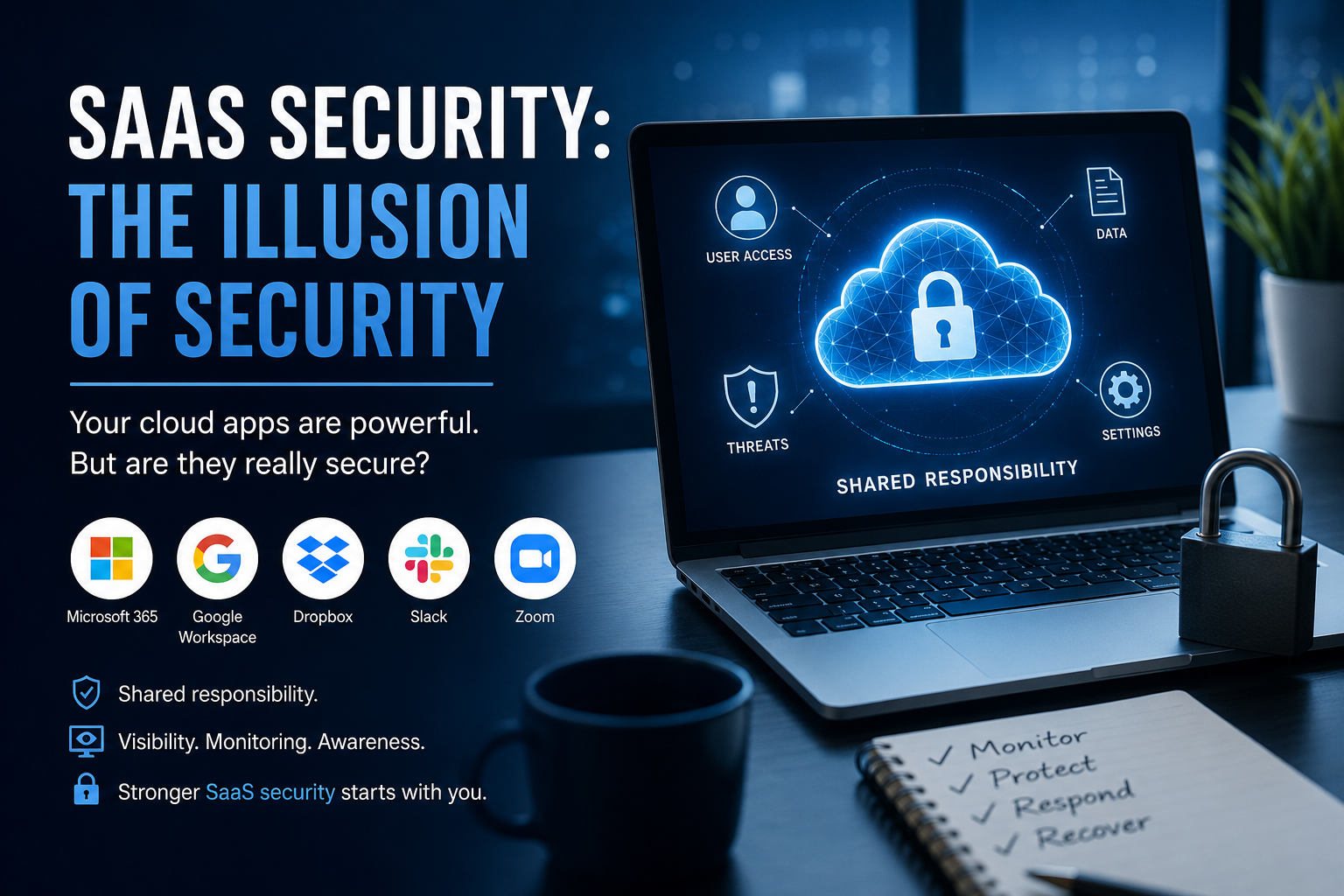
Businesses across the Caribbean rely on SaaS applications every day. Microsoft 365, Google Workspace, Dropbox, Zoom, Slack, accounting software, and CRM platforms have transformed how organizations work. However, many business owners still assume that moving to the cloud automatically means their data is secure. Unfortunately, that assumption creates one of today’s biggest cybersecurity risks. SaaS security is not just the responsibility of the cloud provider. Instead, it requires continuous monitoring, proper configuration, and proactive management to protect your business from modern cyber threats.
Why SaaS Security Matters More Than Ever
Software-as-a-Service (SaaS) applications have become the backbone of modern business operations. They provide flexibility, scalability, and remote access without the need to maintain expensive infrastructure. However, convenience does not equal security. While providers like Microsoft and Google secure the infrastructure that powers their platforms, they cannot secure how every organization configures, manages, or uses those platforms. That responsibility belongs to you. This concept is known as the Shared Responsibility Model and understanding it is essential for effective SaaS security. For more information on Microsoft’s shared responsibility approach click here.
The Biggest Myth About SaaS Security
Many organizations believe that their cloud provider protects everything, built-in security features are enough and cyberattacks only target large enterprises. Unfortunately, none of these assumptions are true. Instead, attackers often target users rather than the cloud platform itself. They steal credentials, exploit excessive permissions, trick employees into clicking phishing emails, or gain access through weak security settings. As a result, an organization can remain compromised for weeks or even months before anyone notices.
Attackers Don’t Need to Hack Microsoft 365
Cybercriminals rarely attack Microsoft 365 or Google Workspace directly. Instead, they attack people. Today’s phishing emails are remarkably convincing. In fact, artificial intelligence allows attackers to create emails that closely resemble legitimate communications from banks, streaming services, suppliers, and even colleagues. Consequently, one accidental click can provide access to business email, sensitive documents, financial information, and customer data.
Visibility Is the Foundation of SaaS Security
One of the biggest cybersecurity challenges is that businesses cannot respond to threats they cannot see. For example, would your organization know if someone logged into your Microsoft 365 account from another country, sensitive files were deleted three months ago, employee credentials appeared on the dark web, an attacker gained access at 2:00 a.m. while everyone was asleep? Without continuous visibility, these events often remain unnoticed until they disrupt business operations.
Cloud Security Requires Active Monitoring
Cloud platforms generate thousands of security alerts. However, alerts alone do not improve SaaS security. Someone must review them, determine whether they represent legitimate activity, and respond quickly before attackers can cause damage. Think of it like the check engine light in your vehicle. Ignoring the warning doesn’t solve the problem, it simply allows it to become more expensive later.
Practical Steps to Improve SaaS Security
Fortunately, improving SaaS security doesn’t always require major investments. Instead, organizations should begin with proven best practices. These include:
1) Enable Multi-Factor Authentication (MFA)
MFA adds an additional verification step whenever users log in. Even if attackers steal a password, MFA makes unauthorized access significantly more difficult.
2) Review User Permissions Regularly
Employees often retain access long after roles change. Therefore, review permissions frequently and remove unnecessary access to reduce risk.
3) Monitor Suspicious Activity
Look for warning signs such as Impossible travel logins, repeated failed login attempts, unusual file downloads, unexpected permission changes, login attempts outside normal business hours. The earlier suspicious activity is identified, the faster it can be contained.
4) Continuous Cyber Awareness Training
Technology alone cannot stop phishing attacks. Employees should know how to recognize suspicious emails, verify unexpected requests, report unusual activity immediately and avoid clicking unknown links or attachments. Cybersecurity awareness remains one of the strongest defenses against modern attacks.
Modern Cyber Threats Never Sleep
Cyberattacks no longer happen only during business hours. Automated bots scan the internet around the clock looking for vulnerable accounts, weak passwords, exposed services, and misconfigured cloud environments. In many cases, businesses never realize they were targeted because security tools blocked the attempts behind the scenes. That doesn’t mean the attacks aren’t happening. It simply means visibility matters more than ever.
Ask Yourself These Four Questions
If you answer “no” to any of these questions, your organization should review its SaaS security strategy.
- Would you know if someone logged into your email account from another country tonight?
- Could you recover an important file deleted several months ago?
- Are your cloud security alerts actively monitored?
- Do you know exactly who has access to your business data today?
If you’re unsure, now is the time to find out, not after an incident occurs.
Important Reminder
Cloud platforms offer tremendous business value. However, they were never designed to eliminate every cybersecurity risk. Strong SaaS security combines technology, visibility, continuous monitoring, employee awareness, and expert guidance. Together, these measures help organizations detect threats earlier, respond faster, and remain resilient against an increasingly sophisticated threat landscape. If your organization relies on Microsoft 365, Google Workspace, or other cloud applications, don’t assume you’re fully protected simply because your data lives in the cloud. Take the time to verify your security posture before attackers do.
Need Help Strengthening Your SaaS Security?
Learn more about our cybersecurity services and request a meeting.
800 TECH helps organizations across the Caribbean improve visibility, detect threats faster, and strengthen their cloud security through proactive monitoring, cybersecurity assessments, managed security services, and business continuity solutions.