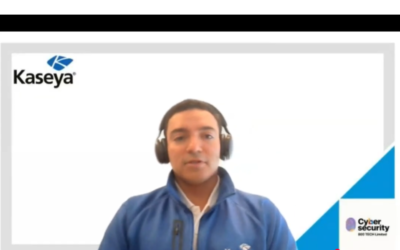

Your inbox is a crime scene and most businesses do not even realize it. Every day, thousands of malicious emails attempt to infiltrate organizations of every size. While firewalls and antivirus software are important, they are not designed to fully secure your email gateway. As a result, phishing, Business Email Compromise (BEC), and ransomware often begin with a single message. One click. One download. One moment of urgency. Therefore, understanding why your inbox is a crime scene is no longer optional in 2026. It is essential. This was the discussion between Junior Gilpin, Director of Education, ISC2 Caribbean Chapter and Curtis Jordon on radio programme the Digital World.
Why Your Inbox Is a Crime Scene in Today’s Digital World
Cybercriminals treat email as their primary weapon. In fact, phishing and Business Email Compromise remain the “bread and butter” of modern cyberattacks. Most ransomware incidents start with a phishing email. A user clicks a link, opens an attachment, or enters credentials into a fake login page. Consequently, attackers gain access and move laterally across the organization. Moreover, email headers contain valuable metadata, including server origin, IP addresses, and routing paths. When a breach occurs, investigators immediately request email logs because that is where the digital evidence lives. Simply put, your inbox is a crime scene because it holds both the entry point and the forensic trail.
Email Visibility: The First Line of Cyber Defense
Email visibility means having deep insight into what enters your email environment before it reaches users. Instead of reacting after a breach, organizations proactively analyze, flag, and quarantine suspicious messages. For example, advanced email security tools inspect:
-
Sender reputation
-
Domain authentication (DMARC, DKIM, SPF)
-
Malicious links
-
Impersonation attempts
-
Suspicious attachments
-
Dark web threat intelligence
As a result, malicious emails are quarantined before employees even see them. Legitimate emails can be released safely, while dangerous ones are blocked entirely.
Without visibility, however, businesses operate blindly. Spam becomes background noise, and hidden threats slip through unnoticed.
Why Firewalls and Antivirus Are Not Enough
Many business owners assume that a firewall and antivirus software provide complete protection. However, that assumption creates dangerous gaps. A firewall controls network traffic based on predefined rules. Meanwhile, antivirus software scans files and applications for known malware signatures. Neither tool was built specifically to analyze email intent, impersonation tactics, or social engineering. For instance, an email can contain a malicious link that does not download anything immediately. Instead, it leads to a fake login page. Because no suspicious file is detected, antivirus software may not flag it. Furthermore, if an internal account is compromised, malicious emails may be sent from inside the organization. In that case, traditional perimeter defenses often fail to stop the spread. Therefore, email security requires its own dedicated layer of defense.
Real-World Example: How One Email Compromises an Organization
Imagine this scenario.
An executive receives an email requesting a payroll update. The sender’s name appears legitimate. However, the domain is slightly altered. Since the request feels urgent, the executive processes the change.
In another case, an employee receives an internal email with a subject line like “January 2026 Salary Increase.” Almost everyone clicks.
Additionally, attackers frequently use “whaling” attacks, where executives are targeted directly. Instead of sending mass emails, criminals send thousands of carefully crafted messages to one high-value individual. They only need one successful click.
Even worse, attackers often create hidden forwarding rules inside compromised mailboxes. As a result, sensitive payroll, invoice, and banking data may continue to be sent to hackers long after the account appears “secured.”
That is why your inbox is a crime scene, the compromise may already be happening silently.
The Role of Social Engineering and Urgency
Cybercriminals understand human psychology. Therefore, they rely heavily on urgency, fear, and reward.
You may see messages such as:
-
“You have 24 hours to process this payment.”
-
“Your account will be suspended immediately.”
-
“Click now to receive $5,000.”
Because pressure overrides caution, people react before they verify. Consequently, attackers exploit emotion rather than technology. Cybersecurity, therefore, is not just an IT issue. It is a people issue.
Small, Medium, and Large Businesses Are All Targets
Many small businesses believe they are too small to be attacked. However, that mindset creates opportunity for criminals.
Attackers do not discriminate. In fact, smaller organizations often lack advanced protections, making them easier targets. Meanwhile, larger organizations are attractive because of their financial scale.
Regardless of size, every business relies on email. Therefore, every business must treat its inbox as a potential crime scene.
What Businesses Should Do Next
First, invest in cybersecurity education. Employees are the first line of defense, yet they are also the most targeted. Second, conduct an email security assessment. Not every organization requires the same solution, so protections should match risk level and operational needs. Third, implement advanced email visibility tools that:
-
Scan messages before inbox delivery
-
Detect impersonation attempts
-
Block malicious domains
-
Monitor dark web threats
-
Provide quarantine management
Finally, build a security-first culture. When employees understand that cyber threats affect everyone, they become proactive participants in defense.
Cybersecurity Is Everyone’s Responsibility
Too often, cybersecurity is treated as an IT department problem. However, that perspective must change. Every employee sends emails. Every executive receives invoices. Every finance team processes payments. Therefore, everyone plays a role in protecting the organization.
When businesses recognize that their inbox is a crime scene, they begin to approach email with caution, visibility, and strategy.
How to Prevent Your Inbox From Being a Crime Scene
Secure Your Inbox Before It’s Too Late. In 2026, ignoring email security is no longer an option. Phishing, ransomware, and Business Email Compromise continue to evolve. Meanwhile, attackers refine their tactics daily. However, with proper email visibility and layered defense, threats can be stopped before they escalate. Your inbox is a crime scene but with the right tools and education, it can also become your strongest line of cyber defense.
For more information on strengthening your organization’s email security, visit www.800-tech.com, connect with 800 Tech on social media, or call 223-TECH (223-8324) to schedule a visibility assessment.