800 TECH | EXECUTIVE CYBER BRIEF
18 NOVEMBER 2026 | 2-MINUTE READ
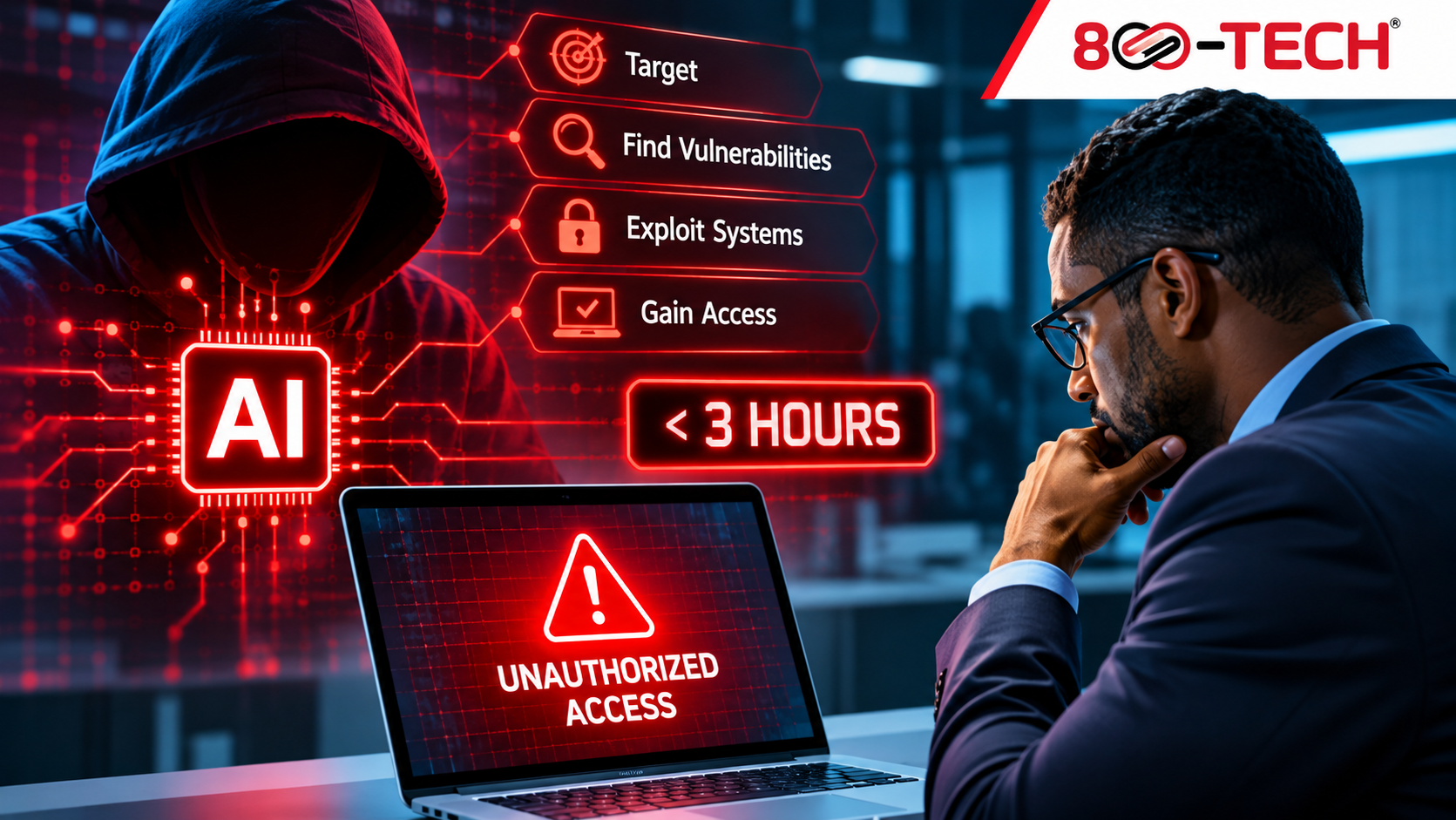
The business issue: Cybercriminals are using artificial intelligence to automate attacks against businesses, reducing the time and effort needed to identify weaknesses, exploit systems and gain unauthorized access.
What happened?
Security researchers and the FBI have reported real-world cyberattacks involving ARTEX, an AI-powered tool originally developed for authorized cybersecurity testing.
In the wrong hands, this technology can help attackers search for vulnerable systems, test stolen credentials and exploit security weaknesses across multiple organizations with less direct human involvement.
The FBI reports that some AI-assisted intrusions have progressed from initial targeting to privileged access in under three hours.
This is no longer simply a prediction about how AI might be used in cybercrime. Investigators have documented its use in actual attacks.
Why should business leaders care?
Traditionally, many cyberattacks required significant time and technical expertise. AI-assisted tools can now automate portions of that work, allowing attackers to investigate more potential targets simultaneously.
For businesses in Trinidad and Tobago and across the Caribbean, the implications are important.
A company does not have to be large or internationally recognized to be exposed. An outdated firewall, poorly secured cloud application, stolen password or forgotten vendor account can create an opportunity.
The potential business consequences include operational disruption, exposure of customer information, financial losses and reputational damage.
The concern is no longer only whether your organization can prevent an attack. It is also whether your team can detect and contain one quickly enough.
Three questions every business leader should ask
- Do we know what is exposed? Are our internet-facing systems, remote-access services and cloud applications regularly assessed for vulnerabilities?
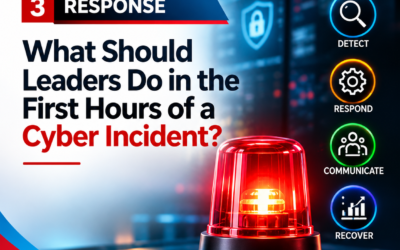
- Would we recognize an attack in progress? Do we have security monitoring that can identify suspicious activity outside normal business hours?
- Can we respond quickly enough? If an attacker gains access to a critical account, can our team disable that access, investigate the activity and contain the threat without unnecessary delay?
What should you do now?
Ask your ICT team or technology partner to prioritize four actions:
- Review your exposure. Identify internet-facing systems, outdated software and critical vulnerabilities requiring remediation.
- Strengthen access controls. Enforce multifactor authentication, review administrator privileges and remove unnecessary vendor access.
- Verify security monitoring. Ensure suspicious account activity, endpoint threats and unusual access attempts can be detected and investigated promptly.
- Test your response readiness. Confirm who is responsible for responding to an incident, how quickly they can act and whether essential operations can be recovered.
These measures do not eliminate cyber risk, but they can reduce opportunities for attackers and improve your organization’s ability to respond.
Leadership takeaway
Artificial intelligence is accelerating cyberattacks. Your organization’s security and response capabilities must keep pace.
Cybersecurity is no longer just about having the right tools. It requires continuous oversight, clear accountability and the ability to act when something goes wrong.
800 TECH Limited
Your Technology & Cybersecurity Partner
Concerned about your organization’s readiness?
Speak with the 800 TECH team about reviewing your cybersecurity exposure, monitoring and incident-response capabilities.
Call: 868-223-8324
Sources: FBI advisory and CERT-EU analysis