

Listen to Nadia explain it more here- https://youtu.be/VGVRYVW6Vm4
What is the Recruitment Management Solution?
RMS is the Recruitment Management Solution. It is an online solution that allows the recruit, or the potential candidate to interact with the company in which they are applying for a position. Now, as we know, the normal process involves companies posting jobs on the website, or they will post jobs through some sort of job agency. When you see the job posting, you can fill out the application, upload your documents, and then you have to wait for a phone call or that manual interaction between yourself and the company. The Recruitment Management Solution eliminates that manual interaction and allows for a quicker, 24/7 interaction between you and the company.
WHERE IS RMS STORED?
RMS, as I indicated, is a portal that will reside on your website, or it can be a link that is also existing on job agencies’ pages. When you click on this link, you’re able to see the positions that are being offered by the company. You can upload all of your information into this portal. Your job letter, your resume, your certificates, all of your IDs, whatever is required of you from that company can be loaded into this space. The minute you hit submit, this information pushes directly to the Human Resources Department. The HR department can process this information immediately.
WHAT HAPPENS NEXT?
So once you are a viable candidate, you will receive an automated response advising you of this. If you have not been accepted, you will also receive an immediate rejection response. Once you have been accepted as a viable candidate, you will be given a schedule for your interview through this RMS portal. The schedule for your interview will come directly to your email. You will be able to get interviewed within the space of the portal because once you’ve been accepted as a candidate, you will now have your username and password. So you can log into the portal, and within that virtual space, the interview will be conducted between you and your potential employer.
WHAT HAPPENS WITHIN THE COMPANY?
Within the company, the HR department will be using RMS to enter and keep track of questions that they will use for the interview process. They can also score the interviewee, collate those scores within the program. At the end of each interview, the application will provide you with the ranking of the interviewees based on the scores collated. Everything happens within this portal.
So it allows for data to be stored through the full duration of the recruitment process. It ensures that there is no bias when it comes to the scoring of candidates because everything is conducted within the portal space. Once you have been accepted as the candidate of choice, you will receive an automated email indicating that you were successful.
RMS PROMOTES EFFICIENCY
It is a seamless process when the new employee starts in the organization because neither HR nor the employee will be required to share or enter the employee’s information a second time. With one simple click, HR can now take all of the information that the employee initially entered, and import it directly into the HRM, which is the Human Resource Management application. It also goes directly into the 360HRM – Employee Management Module, which is the digital version of the employee’s personnel file that is usually stored in a manila folder in a filing cabinet.
All of the employee’s information is entered once and is now imported directly to the requisite departments, thus eliminating redundancy of entering information in different places, eliminating that labor-intensive task of data entry, and more importantly, ensuring data integrity with data that is being entered.
So I hope I answered your question on what is RMS.
If you missed any of the discussions, watch them here – https://youtu.be/0WEn9Bg0ewc
Our Blog
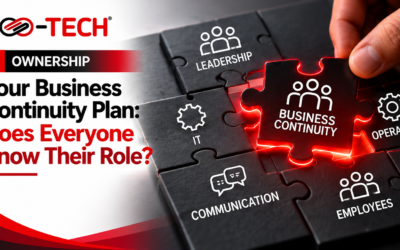
Your Business Continuity Plan: Does Everyone Know Their Role?
A business continuity plan is only as strong as its people Your business continuity plan lists the production manager, sales lead and communications officer. But have those employees ever rehearsed their responsibilities? If not, the document may offer comfort...
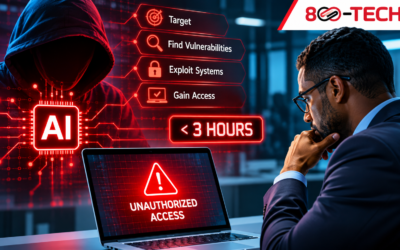
Cyberattacks Are Getting Faster. Is Your Business Ready to Respond?
800 TECH | EXECUTIVE CYBER BRIEF 18 NOVEMBER 2026 | 2-MINUTE READ The business issue: Cybercriminals are using artificial intelligence to automate attacks against businesses, reducing the time and effort needed to identify weaknesses, exploit systems and gain...
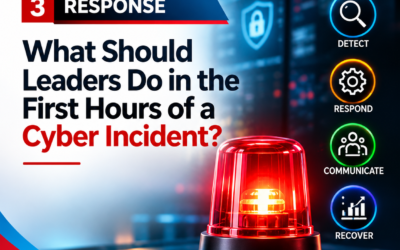
What Should Leaders Do in the First Hours of a Cyber Incident?
The first hours should activate a cyber incident response plan A finance employee notices unusual messages from a trusted supplier. Soon afterward, colleagues report suspicious sign-in activity. Should the organization disable an account, halt payments or contact...
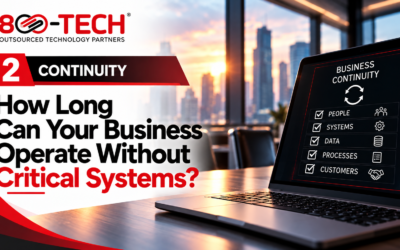
How Long Can Your Business Operate Without Critical Systems?
Which critical systems keep your business operating? Imagine a Caribbean manufacturer whose production scheduling system becomes unavailable during a busy delivery week. Employees may still arrive at work, yet orders, dispatch and customer commitments quickly suffer....
Who Is Accountable for Cybersecurity in Your Business?
Why cybersecurity accountability belongs in the boardroom? A supplier’s compromised account can cause your organization’s problem overnight. When a payment instruction changes or a customer cannot access a service, clients will look to the business, not its IT...
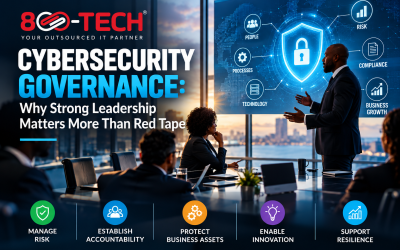
Cybersecurity Governance: Why Strong Leadership Matters More Than Red Tape
When business leaders hear the word governance, they often think of bureaucracy, lengthy approval processes, additional policies and unnecessary restrictions. However, effective cybersecurity governance should achieve the opposite. It should help organizations make...
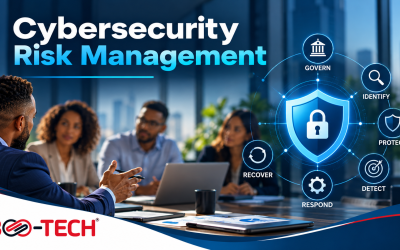
Cybersecurity Risk Management: Don’t Just Pay for Security, Test It!
Many organizations still think about cybersecurity in much the same way they think about insurance: something they pay for in case something goes wrong. It is an understandable comparison, but it creates a dangerous mindset. Cyber insurance can help absorb part of the...
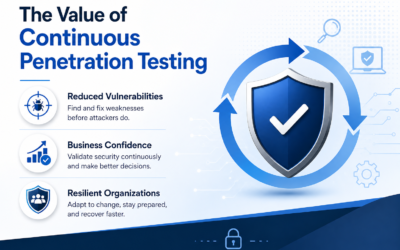
Continuous Penetration Testing: Why Modern Businesses Must Continuously Validate Security
Why Continuous Penetration Testing Matters Business environments never stand still. Every software update, cloud migration, vendor integration, employee onboarding, or configuration change introduces new opportunities for cyber attackers. Therefore, organizations can...
Business Cybersecurity: Why It’s No Longer Just an IT Issue
Business Cybersecurity Is About Business Survival For years, many organizations viewed cybersecurity as the responsibility of the IT department. However, today's business environment tells a different story. Every new employee, cloud application, software update, AI...