

After our last webinar, we had a lot of inquiries from clients regarding digital transformation and how that process could work for their business. I want to emphasize the fact that digital transformation is not only for big corporations, it is also very applicable to medium-sized businesses, small businesses, and micro-businesses. Regardless of the size of your business, you transform digitally, to be able to compete in the new digital world.
THE CLIENT’S CHALLENGE:
We were contacted by a client who has a medium-sized business, operating in the customs brokerage industry. The main issue they presented was the lack of connectivity between their data sources. More specifically, each individual PC housed different pockets of information and the client would physically move from PC to PC to collate the data. Thus, whenever a customer would call to get information on the status of a shipment, it would be a very arduous task for staff to retrieve the relevant information in a timely manner.
The second issue this client highlighted was difficulty retrieving historical data because everything was recorded on paper and placed in large storage boxes. They were also concerned about the inability to adequately analyze and generate reliable reports on current operational activities.
Lastly, another key concern was the method used for capturing their customer data over the phone. All data collected resided solely with the staff member who interacted with the customer. Thus, preventing other members of staff from accessing said data to allow for efficient customer service.
The owner realized that this was not an efficient way to manage or run a business, so they came to us looking for a solution. We engaged with the client and broke down the transition process into phases, from phase one to phase four. For each phase, we identified the specific issue we would be working to resolve. After our thorough analysis, we started off with the most immediate need or the greatest pain point, which was the area that was causing the greatest loss in revenue for this client.
OUR RECOMMENDATIONS
We are in the process of creating a system that will allow them to track their customers and vendors utilizing one database.
We built a CRM system specifically for this client that will allow for access to clients and vendors using one application. This has all been built utilizing a Microsoft solution called Dynamics 365. We are using Dynamics 365 in conjunction with SharePoint for storage, to create the solution for this client.
MICROSOFT DYNAMICS 365 + SHAREPOINT
This solution allows the client to capture details on the customers and their vendors, in specific areas. The client had an extensive list of items that they wanted to be collated and collected from their vendors and customers. Thus, Microsoft Power Apps was implemented it allowed us to have a cohesive system that house both customer and vendor data. Additionally, all supporting documentation was stored in SharePoint.
Hence, each time a new customer/vendor is initiated, it creates a new file in SharePoint that stores all the information pertinent to that customer / vendor in that particular file.
Very soon we will be presenting that solution to the client, and I know that they will be exhilarated by all the features and functionality readily available at their finger-tips.
POWER BI
In phase two of the development, we will be adding Power BI which will allow graphical representations of reports, for example, the client can generate a report showing how many customers they onboarded in a month or a report on what data has been submitted by a specific customer. They will also be able to generate graphical data for vendors in the system.
Then we will quickly roll into stage two of the digital transformation for this client, where we will create a database to track each shipment using Power Apps. The client currently has this data on a spreadsheet, but we will be building a database so that the tracking of shipments will be more streamlined.
Stay tuned, stay connected. We will be showing you how we are helping customers transform digitally, just by using Microsoft solutions and our customers’ applications.
Or take the next step and schedule a consult with us to get you started:
Our Blog
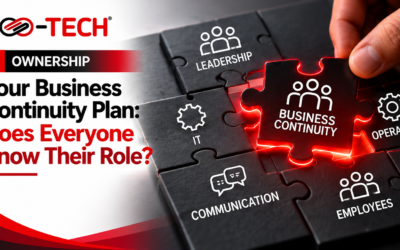
Your Business Continuity Plan: Does Everyone Know Their Role?
A business continuity plan is only as strong as its people Your business continuity plan lists the production manager, sales lead and communications officer. But have those employees ever rehearsed their responsibilities? If not, the document may offer comfort...
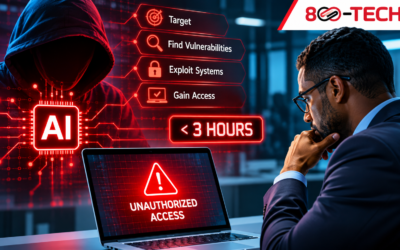
Cyberattacks Are Getting Faster. Is Your Business Ready to Respond?
800 TECH | EXECUTIVE CYBER BRIEF 18 NOVEMBER 2026 | 2-MINUTE READ The business issue: Cybercriminals are using artificial intelligence to automate attacks against businesses, reducing the time and effort needed to identify weaknesses, exploit systems and gain...

What Should Leaders Do in the First Hours of a Cyber Incident?
The first hours should activate a cyber incident response plan A finance employee notices unusual messages from a trusted supplier. Soon afterward, colleagues report suspicious sign-in activity. Should the organization disable an account, halt payments or contact...
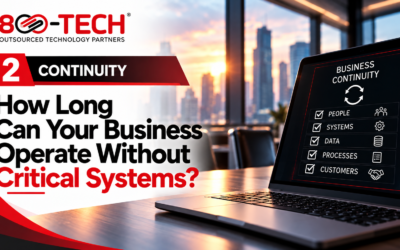
How Long Can Your Business Operate Without Critical Systems?
Which critical systems keep your business operating? Imagine a Caribbean manufacturer whose production scheduling system becomes unavailable during a busy delivery week. Employees may still arrive at work, yet orders, dispatch and customer commitments quickly suffer....

Who Is Accountable for Cybersecurity in Your Business?
Why cybersecurity accountability belongs in the boardroom? A supplier’s compromised account can cause your organization’s problem overnight. When a payment instruction changes or a customer cannot access a service, clients will look to the business, not its IT...
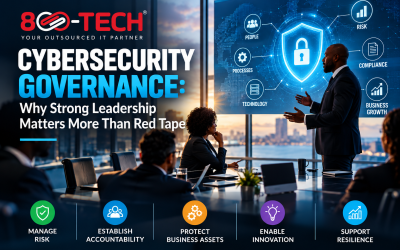
Cybersecurity Governance: Why Strong Leadership Matters More Than Red Tape
When business leaders hear the word governance, they often think of bureaucracy, lengthy approval processes, additional policies and unnecessary restrictions. However, effective cybersecurity governance should achieve the opposite. It should help organizations make...
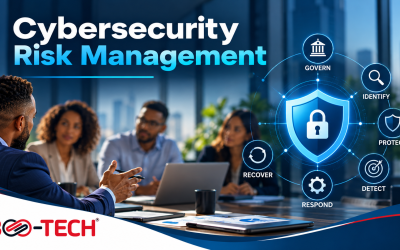
Cybersecurity Risk Management: Don’t Just Pay for Security, Test It!
Many organizations still think about cybersecurity in much the same way they think about insurance: something they pay for in case something goes wrong. It is an understandable comparison, but it creates a dangerous mindset. Cyber insurance can help absorb part of the...
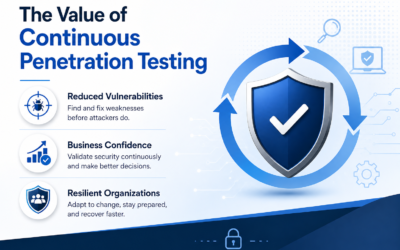
Continuous Penetration Testing: Why Modern Businesses Must Continuously Validate Security
Why Continuous Penetration Testing Matters Business environments never stand still. Every software update, cloud migration, vendor integration, employee onboarding, or configuration change introduces new opportunities for cyber attackers. Therefore, organizations can...

Business Cybersecurity: Why It’s No Longer Just an IT Issue
Business Cybersecurity Is About Business Survival For years, many organizations viewed cybersecurity as the responsibility of the IT department. However, today's business environment tells a different story. Every new employee, cloud application, software update, AI...