

We began a webinar series called- Five Steps to Becoming Globally Competitive because we wanted to continue to educate our audience about the different sides of digital transformation and the important role it plays in their growth, productivity, and bottom line.
Our first conversation examined the importance of the strategy behind digital transformation with a conversation with Makeda Antoine Cambridge. Mrs. Antoine- Cambridge is the Founder and CEO of Genesis International Limited which is a social enterprise in the business of transforming Micro, Small, and Medium Enterprises (MSMEs) into successful ventures, while financially empowering communities.
In case you missed it, view it here
Four salient points were discussed that could help our business community in the pursuit of digital transformation and the role strategy plays.
1. Leadership, not technology
The first thing we need to understand is that digital transformation is about leadership and how you utilize technology to create that advantage.
2. Digital Transformation is a strategy that utilises technology
Digital transformation is a strategy utilizing technology to create a competitive advantage. Technology is not the main factor. The strategy is the main factor. The strategy is the important part of this whole transformational process. If you don’t have an effective strategy, then you would not have a good transformational process. That is because digital transformation is about transforming your business, but the vehicle is technology. The strategy is the biggest part of that process.
3. Understand your future state
As the leader of your organization, you must understand your future state. Ask yourself where you want to be in two, three, or four years, and understand what you want your customers to experience. Then you work backward and reverse engineer that process. You must understand your future state.
4. Get your employees on board
Digital transformation cannot happen with the involvement of upper management or the board members only. It happens with a holistic interaction within every tier of a company. Get your employees involved in the initial stages, through teams so they understand that they are part of the creation of a system based on a strategy. This approach will boost efficiency, productivity, customer satisfaction and, it will make their jobs a little easier. It will also help the organization have access to statistics that can be analyzed. This will remove the fear that often comes along with the digital transformation process.
The takeaway from this conversation with Ms. Antoine was that strategy is the most important aspect of digital transformation. This strategy is what will create the differentiator. Technology is the vehicle we are going to utilize to enable that strategy.
Don’t miss out on the other conversations about becoming globally competitive. Every Thursday at 2 pm we introduce a subject matter expert to speak on the stages of digital transformation.
Join us this Thursday- https://www.linkedin.com/company/800tech/
Our Blog
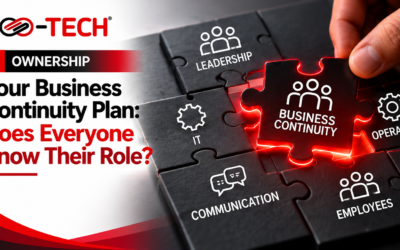
Your Business Continuity Plan: Does Everyone Know Their Role?
A business continuity plan is only as strong as its people Your business continuity plan lists the production manager, sales lead and communications officer. But have those employees ever rehearsed their responsibilities? If not, the document may offer comfort...
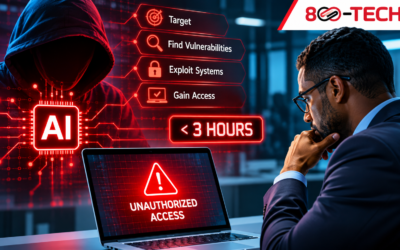
Cyberattacks Are Getting Faster. Is Your Business Ready to Respond?
800 TECH | EXECUTIVE CYBER BRIEF 18 NOVEMBER 2026 | 2-MINUTE READ The business issue: Cybercriminals are using artificial intelligence to automate attacks against businesses, reducing the time and effort needed to identify weaknesses, exploit systems and gain...

What Should Leaders Do in the First Hours of a Cyber Incident?
The first hours should activate a cyber incident response plan A finance employee notices unusual messages from a trusted supplier. Soon afterward, colleagues report suspicious sign-in activity. Should the organization disable an account, halt payments or contact...
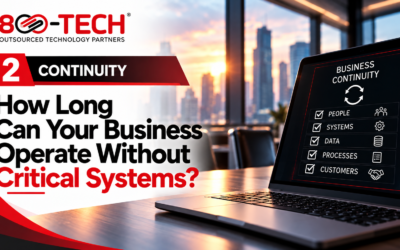
How Long Can Your Business Operate Without Critical Systems?
Which critical systems keep your business operating? Imagine a Caribbean manufacturer whose production scheduling system becomes unavailable during a busy delivery week. Employees may still arrive at work, yet orders, dispatch and customer commitments quickly suffer....

Who Is Accountable for Cybersecurity in Your Business?
Why cybersecurity accountability belongs in the boardroom? A supplier’s compromised account can cause your organization’s problem overnight. When a payment instruction changes or a customer cannot access a service, clients will look to the business, not its IT...
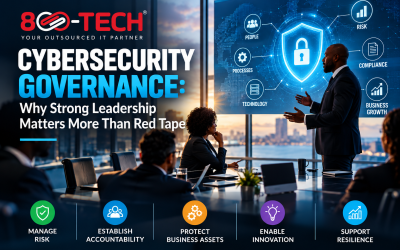
Cybersecurity Governance: Why Strong Leadership Matters More Than Red Tape
When business leaders hear the word governance, they often think of bureaucracy, lengthy approval processes, additional policies and unnecessary restrictions. However, effective cybersecurity governance should achieve the opposite. It should help organizations make...
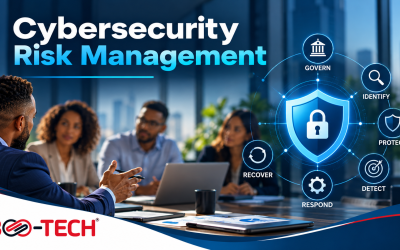
Cybersecurity Risk Management: Don’t Just Pay for Security, Test It!
Many organizations still think about cybersecurity in much the same way they think about insurance: something they pay for in case something goes wrong. It is an understandable comparison, but it creates a dangerous mindset. Cyber insurance can help absorb part of the...
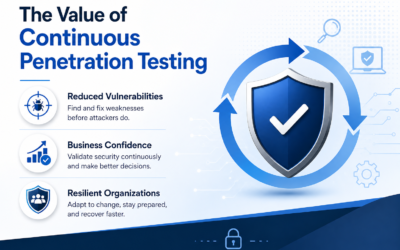
Continuous Penetration Testing: Why Modern Businesses Must Continuously Validate Security
Why Continuous Penetration Testing Matters Business environments never stand still. Every software update, cloud migration, vendor integration, employee onboarding, or configuration change introduces new opportunities for cyber attackers. Therefore, organizations can...

Business Cybersecurity: Why It’s No Longer Just an IT Issue
Business Cybersecurity Is About Business Survival For years, many organizations viewed cybersecurity as the responsibility of the IT department. However, today's business environment tells a different story. Every new employee, cloud application, software update, AI...