

It’s a wrap! We concluded the last episode of our webinar series 5 Steps to Become Globally Competitive – The Benchmarking Phase. It was our last episode, and an exciting episode, that helped to pull all the concepts that we’ve been sharing over the last month and a half together. From strategy, all the way down to benchmarking, and explaining the impact and the importance of benchmarking.
If you missed this episode, then tune in here- The Benchmarking Phase
WHAT IS BENCHMARKING?
Benchmarking is where companies can compare the performance of what’s taking place within their environment based on key elements. These key elements are in the parameters of time, cost, and quality. Other parameters can also be measured, but most times, those are the key elements that companies examine.
INTERNAL vs. EXTERNAL
The benchmarking process can be umbrellaed under two components, whether it’s an internal benchmarking process taking place within the organization or an external benchmarking process.
An internal benchmarking process, the company looks within itself, from
- a process level,
- a departmental level, and
- an organizational level
A process level means, the company is examining how they performed historically against their current performance, that is how they are now performing. They do that comparison to measure the time saved, cost reduction, and whether the quality of that specific process has been enhanced.
Those parameters are used also when the company is examined at a departmental level. In this case, departments are compared. This process entails comparing efficiencies, productivity, cost savings, and methodologies employed in one department with another. Looking at those comparisons, we take those examples of high performance and determine how we can best fit into a department that may not be running as well or as efficiently. It’s an effective way of mimicking that business model in one department against another business model to refine and re-engineer it into a more productive and high-performing environment.
We also spoke about looking at benchmarking from an external perspective. The external perspective takes a keen look at competitors, locally, regionally or globally, (especially as this webinar series speaks specifically about becoming globally competitive). This perspective allows you to measure your performance against your competitors by reviewing their business model that is allowing for service excellence.
This is where the whole benchmarking exercise becomes such a critical component because we either want to meet or surpass our competitors. After all, you want to have your footprint within your sector. Through benchmarking, you can gain an appreciation of the shifts that need to take place within your business model to achieve that. More importantly, it’s an effective way to gain a competitive edge.
THE BENCHMARKING PROCESS IN ACTION
Let’s look at an example. If you benchmark an international pizza company that uses a process that is efficient and effective in creating a quality product. You do the necessary due diligence by examining what is making them a high performer. This is not an ad hoc process but is completely data-driven to seek to understand what is making them a high performer. Then you examine and compare your business model to fully understand the gaps that exist to determine what you need to do to fill those gaps. That’s the planning phase of the whole benchmarking process, ‘”where are the gaps, how do I fill the gaps?”. Once you have clarity about your organizational gaps and understand how to fill those gaps, then you get into the implementation component of the benchmarking phase.
Once you have identified the gaps, you begin implementing based on recommendations within the context of the benchmarking exercise.
If you want more information or a greater appreciation of how to go about benchmarking your organization, whether from the internal perspective or the external perspective, feel free to contact us.
Our Blog
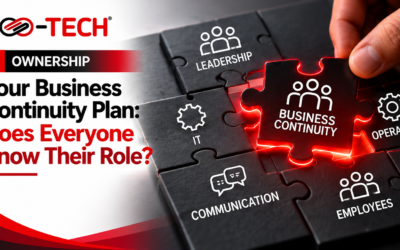
Your Business Continuity Plan: Does Everyone Know Their Role?
A business continuity plan is only as strong as its people Your business continuity plan lists the production manager, sales lead and communications officer. But have those employees ever rehearsed their responsibilities? If not, the document may offer comfort...
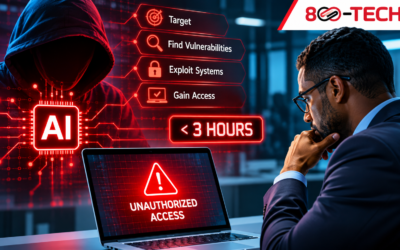
Cyberattacks Are Getting Faster. Is Your Business Ready to Respond?
800 TECH | EXECUTIVE CYBER BRIEF 18 NOVEMBER 2026 | 2-MINUTE READ The business issue: Cybercriminals are using artificial intelligence to automate attacks against businesses, reducing the time and effort needed to identify weaknesses, exploit systems and gain...
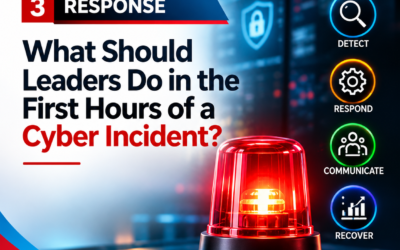
What Should Leaders Do in the First Hours of a Cyber Incident?
The first hours should activate a cyber incident response plan A finance employee notices unusual messages from a trusted supplier. Soon afterward, colleagues report suspicious sign-in activity. Should the organization disable an account, halt payments or contact...
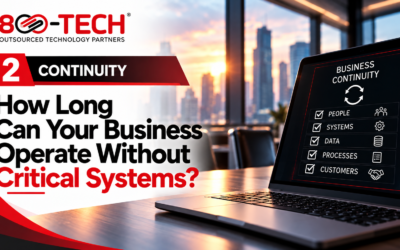
How Long Can Your Business Operate Without Critical Systems?
Which critical systems keep your business operating? Imagine a Caribbean manufacturer whose production scheduling system becomes unavailable during a busy delivery week. Employees may still arrive at work, yet orders, dispatch and customer commitments quickly suffer....

Who Is Accountable for Cybersecurity in Your Business?
Why cybersecurity accountability belongs in the boardroom? A supplier’s compromised account can cause your organization’s problem overnight. When a payment instruction changes or a customer cannot access a service, clients will look to the business, not its IT...
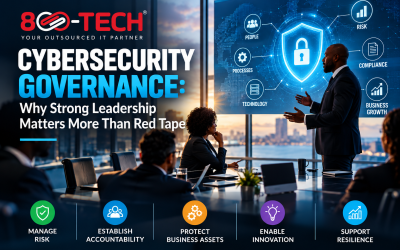
Cybersecurity Governance: Why Strong Leadership Matters More Than Red Tape
When business leaders hear the word governance, they often think of bureaucracy, lengthy approval processes, additional policies and unnecessary restrictions. However, effective cybersecurity governance should achieve the opposite. It should help organizations make...
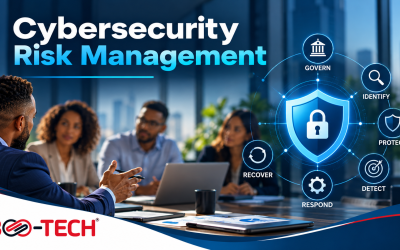
Cybersecurity Risk Management: Don’t Just Pay for Security, Test It!
Many organizations still think about cybersecurity in much the same way they think about insurance: something they pay for in case something goes wrong. It is an understandable comparison, but it creates a dangerous mindset. Cyber insurance can help absorb part of the...
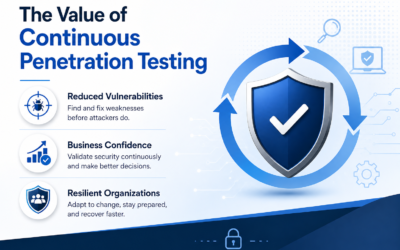
Continuous Penetration Testing: Why Modern Businesses Must Continuously Validate Security
Why Continuous Penetration Testing Matters Business environments never stand still. Every software update, cloud migration, vendor integration, employee onboarding, or configuration change introduces new opportunities for cyber attackers. Therefore, organizations can...

Business Cybersecurity: Why It’s No Longer Just an IT Issue
Business Cybersecurity Is About Business Survival For years, many organizations viewed cybersecurity as the responsibility of the IT department. However, today's business environment tells a different story. Every new employee, cloud application, software update, AI...